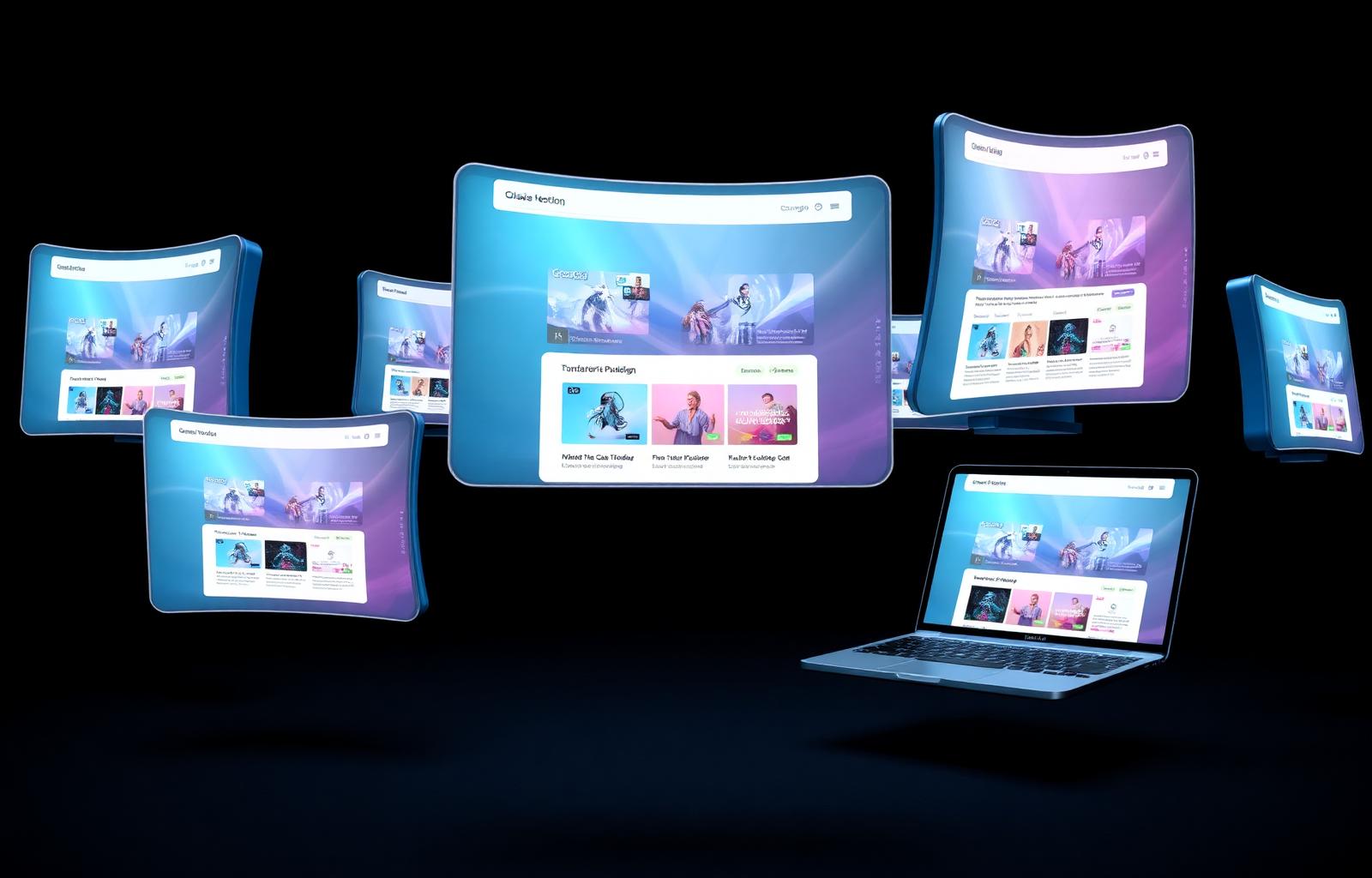
A new generation of design systems is being born — not as catalogs of buttons, but as environments. They carry motion, depth, sound and adaptive theming as first-class primitives. The output looks less like a UI kit and more like a cinematic surface.
What a Modern Design System Actually Contains
The first-generation design system was a Sketch file with a component library attached to a Confluence page. It solved the consistency problem but solved nothing else. It had no opinion about how components should move, how spacing should respond to context, or how color should adapt to ambient conditions. The third generation, emerging now in the systems powering products like Vercel, Linear, and Stripe, treats the design system as a runtime — a layer of the product that has opinions about physics, time, and context.
The four primitive layers of a mature design system
- Design tokens: The single source of truth for every visual decision — color, typography, spacing, border radius, shadow, duration, easing. Tokens are semantic aliases (color-surface-elevated, duration-transition-standard) that resolve to raw values through a theming layer. This indirection is what makes a system adaptive rather than static.
- Motion language: A defined vocabulary of transitions, animations and micro-interactions with consistent easing curves, duration scales and semantic meaning. Motion is documented with the same rigor as color.
- Spatial conventions: A spacing scale and elevation system that governs how components relate to each other in three-dimensional space — not just their X/Y layout but their perceived depth through shadow, blur and layering.
- Adaptive theming: The machinery that allows the system to shift between light and dark modes, high-contrast accessibility modes, brand variants, and context-specific configurations without rebuilding components.
System vs. Library: The Distinction That Matters
A component library is a collection of reusable UI elements. A design system is a shared language — with grammar, conventions, and the governance structures that keep it coherent as teams contribute to it over time. The difference is consequential. A library without a system degrades: teams fork components when the library doesn't serve their needs, token overrides accumulate, and within eighteen months the "unified" library has spawned a dozen dialects. The organizations that get this right treat the system as a product with a product manager, a roadmap, and versioned releases.
The design system of the future is not a Figma file. It is a runtime — a living layer of the product with physics, memory, and the ability to adapt to context without human intervention.
How Vercel, Linear, and Stripe Structure Their Systems
Vercel's design system is built on a token graph that maps semantic decisions to primitive values in a single structured JSON file. Every engineer who ships a component pulls from that graph — there are no hardcoded hex values anywhere in production code. This discipline is enforced at the linting level, not the honor system level.
Linear's system is distinguished by its motion language. The team has documented an explicit easing vocabulary — "swift," "standard," "expressive" — each with specific cubic-bezier curves and duration ranges. Every animation in the product uses one of these named curves, producing a product that feels choreographed rather than assembled. Stripe's contribution is their token-to-code pipeline that generates platform-specific token files from a single design source, eliminating the manual translation step that causes most multi-platform token drift.
Building Your Own Token System
The practical starting point is building a two-tier token architecture. The first tier is primitive tokens: raw values with no semantic meaning — blue-500: #3b82f6, space-4: 16px, duration-200: 200ms. The second tier is semantic tokens: aliases that reference primitive tokens and carry contextual meaning — color-action-primary: blue-500, space-component-padding: space-4. Components reference only semantic tokens, never primitives. This two-tier structure is what makes theming and dark mode work without duplicating every component.
| Maturity Level | Characteristics | Team Size Fit |
|---|---|---|
| Level 0: Ad hoc | No shared library, components copied per project, hardcoded values everywhere | 1–3 designers, early prototype stage |
| Level 1: Library | Shared Figma component file, basic Storybook, no token system | 3–8 person team, single product |
| Level 2: Token system | Two-tier token architecture, dark mode, versioned npm package | 8–25 person team, 2+ products |
| Level 3: Motion and adaptive | Named motion vocabulary, context-adaptive theming, CI-enforced token discipline | 25–100 person team, platform product |
| Level 4: Runtime system | Cross-platform token pipeline, AI-assisted documentation, consumer teams as first-class stakeholders | 100+ person org, multiple platforms |
Adaptive Theming with CSS Custom Properties
The technical implementation of adaptive theming relies almost exclusively on CSS custom properties rather than separate compiled stylesheets per theme. The pattern is straightforward: semantic tokens are defined as CSS custom properties on the :root selector, then overridden inside a [data-theme="dark"] attribute selector. Components reference only the semantic custom properties. When the theme attribute switches, every component inherits the new values without any JavaScript intervention or class-name switching.
Team Processes for a Living System
The hardest problem in design systems is not technical — it is organizational. How do you keep a system alive as the teams consuming it grow, diverge, and develop specialized needs? The organizations that do this well treat the design system team as an internal platform team with explicit customers. This means running quarterly consumer research, publishing a roadmap not just a changelog, and defining a clear contribution model for how product teams can propose new components.
The alternative — a system maintained by one or two individuals without a governance model — creates a bottleneck that eventually causes teams to abandon the system entirely. The graveyard of enterprise design systems is full of technically excellent libraries that were organizationally neglected. The maturity of a design system is ultimately measured not by the quality of its tokens but by the health of the community that maintains and extends it.
Frequently asked
Where should a small team start with a design system?+
Start with typography and spacing tokens only. Getting those two right — a type scale and a spacing scale that the whole team uses consistently — delivers 80% of the consistency benefit with 20% of the complexity.
What's the ROI of investing in a design system?+
The most measurable ROI is engineering velocity: teams with mature design systems ship new feature UI 40–60% faster than teams without, because component assembly replaces custom implementation. Secondary ROI comes from reduced design QA cycles and faster onboarding.